Alice Parkes
This e-mail address is being protected from spambots. You need JavaScript enabled to view it
Research Associate
514-987-3000, ext 1463
Université du Québec à Montréal
Pavillon des sciences biologiques, SB-2385
2080 St-Urbain
Montréal, Québec
H2X 3X8
Canada
M.Sc. 2002 McGill University, Thesis title: "The role of bacteria and algae in the diet and distribution of black fly larvae"
B.Sc. 1998 McGill University, Major in Biology, Concentration in Ecology
"Autonomous buoys are monitoring, whether the weather is good or bad"
Autonomous buoys are continually monitoring lakes, whether the weather is good or bad, in order to collect high-resolution and long-term data on the water column. These data allow us to study how the lake's biological, chemical and physical characteristics change in time, whether it be in a diurnal cycle (eg. production-respiration balance of the ecosystem), a seasonal progression (eg. thermal stratification), or in relation to a stochastic event (eg. storm or toxic algal bloom). Furthermore, monitoring the lakes year after year allows us to examine long-term changes relating to climate. The buoys also create opportunities for collaborations, especially with the members of GLEON (Global Lake Ecological Observatory Network), a global network of people who study lakes, many using high-resolution buoy data. The autonomous buoys, installed on Lac Croche (Laurentians) and on Lac Simoncouche (Saguenay), in collaboration with the GRIL, are equipped with probes that measure temperature profiles, irradiance, colour, turbulence, dissolved gases (O2 and CO2), as well as the fluorescence of chlorophyll and CDOM. These probes take measurements every 10 minutes while a weather probe takes continuous measurements. Data provided by the buoys have already been used to study the effect of storms on CO2 dynamics in lakes and other studies are underway, exploring ecosystem metabolism and the effect of turbulence on CO2 fluxes. The autonomous buoys are thus new tools that allow us to explore questions that could not be explored by taking samples in person.
Publications
Li, M., P. A. del Giorgio, A. H. Parkes, and Y. T. Prairie. 2015. The relative influence of topography and land cover on inorganic and organic carbon export from catchments in Southern Quebec, Canada. Journal of Geophysical Research: Biogeosciences, doi: 10.1002/2015JG003073
Parkes, A. H., J. Kalff, J. Boisvert, and G. Cabana. 2004. Feeding by black fly (Diptera:Simuliidae) larvae causes downstream losses in phytoplankton, but not bacteria. Journal of the North American Benthological Society, 23(4): 780-792, doi: 10.1899/0887-3593(2004)023<0780:FBBFDL>2.0.CO;2
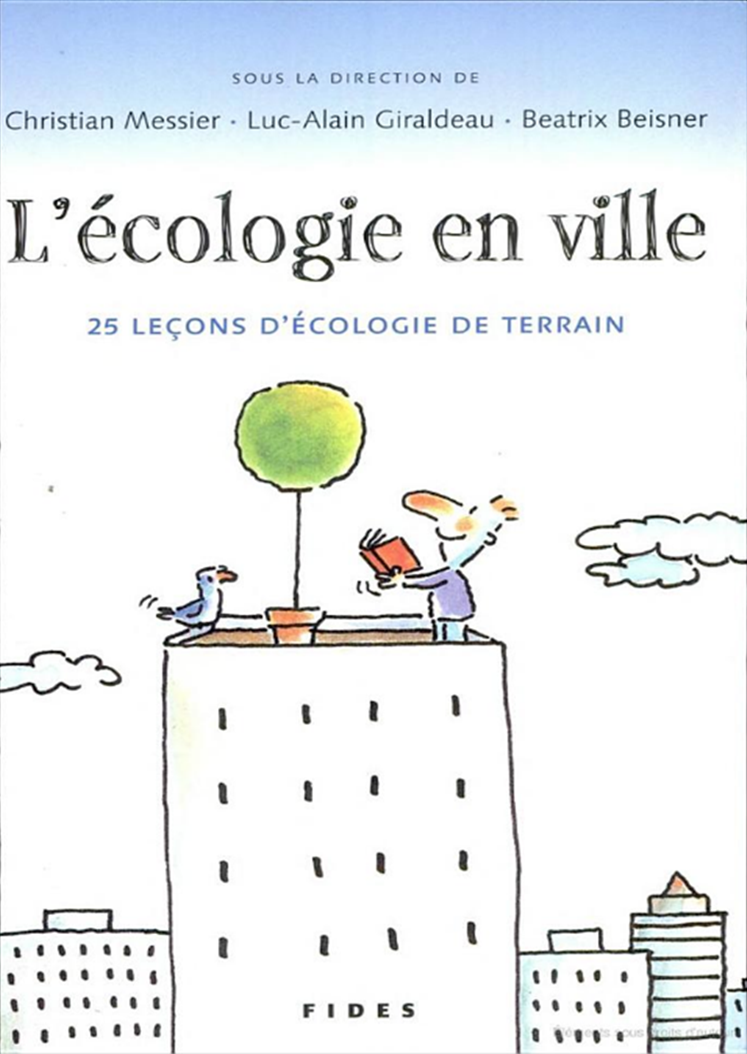
Parkes, A. 2006. "Ma pomme, c'est moi!" In: Messier, C., L-A Giraldeau, B.E. Beisner (Eds). L'écologie en ville. Édition Multimonde, FIDES, Montréal, QC.
Parkes, A. 2012. "Apple at my core" In: Messier, C., L-A Giraldeau, B.E. Beisner (Eds). Nature All Around Us. University of Chicago Press, USA.